



High Porosity Hair
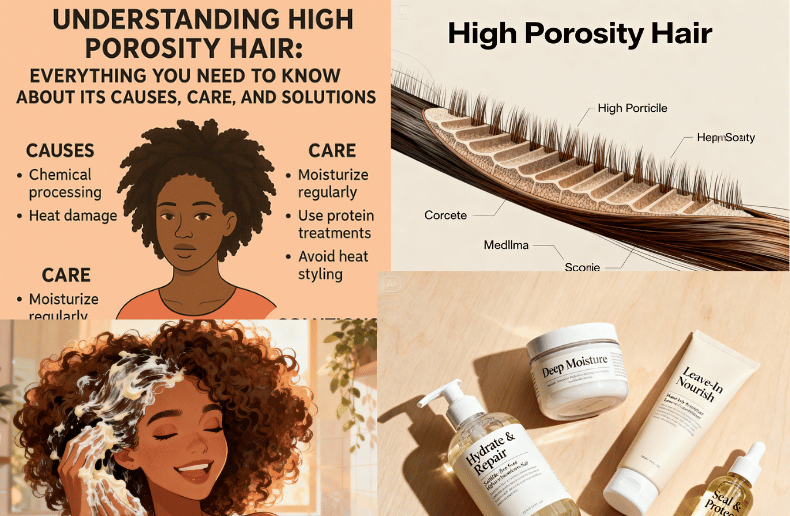
High porosity hair is a common yet often misunderstood hair type. In this article, we will explore the characteristics, causes, and solutions for managing high porosity, providing you with an easy-to-follow guide for care and maintenance.
If you’ve ever wondered why your hair seems to soak up products and water quickly yet still looks dry, frizzy, or damaged soon after, you may be dealing with high-porosity hair. This article will walk you through what high porosity hair really means, how to recognise it, what causes it, and how to care for it with an easy-to-read, up-to-date guide.
| Topic | Summary |
| Meaning | Hair absorbs moisture quickly but loses it fast due to lifted/damaged cuticles. |
| Causes | Genetics, chemical treatments, heat styling, environmental damage, and over-manipulation. |
| Key Signs | Quick water absorption, dryness, frizz, tangling, dullness, fast air-drying. |
| Tests | Float Test: Hair sinks fast. Spray Test: Water absorbs instantly. Feel Test: Strand feels rough/bumpy. |
| Pros | Moisture/products absorb quickly, dry faster, and treatments work faster. |
| Challenges | Loses moisture quickly; prone to breakage, frizz, and a rough texture; needs consistent care. |
| Care Tips | Deep conditioning, leave-in conditioners, sealing oils, protein treatments, sulfate-free shampoos. |
| Styling Tips | Protective styles (braids, buns), lightweight products, satin/silk pillowcases. |
| Routine (Short) | Wash with gentle shampoo → Deep condition → Cool rinse → LOC/LCO → Protective styling. |
| Home Remedies | Aloe vera, avocado mask, yogurt + honey. |
| Mistakes to Avoid | Heavy products without sealing, too much product, skipping protein, heat damage, rough handling. |
What does “High Porosity” mean?
What is porosity?
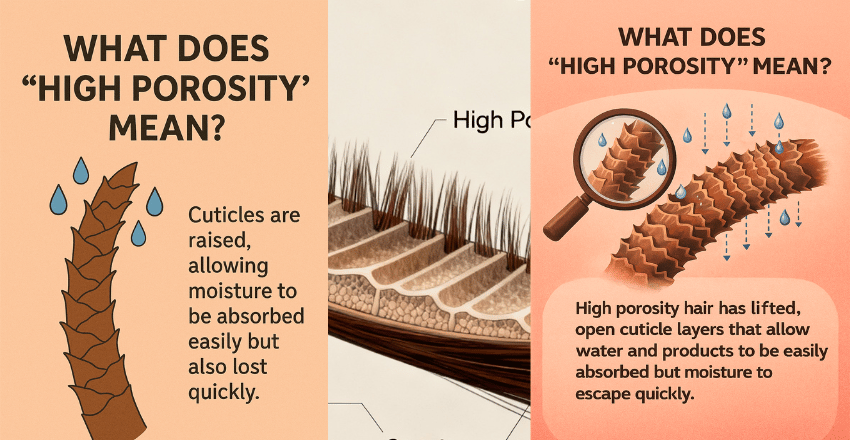
Hair porosity refers to a strand’s ability to absorb and retain moisture. The outer layer of the hair shaft, the cuticle, controls how easily water and hair products can pass in and out.
Think of it like this: if your hair cuticle is like shingles on a roof, when the shingles lie flat, water can’t get in easily (low porosity). But when the shingles are lifted or have gaps, water (and product) may enter quickly and often exit just as fast (high porosity).
Porosity categories
Hair is usually classified into three porosity levels
- Low porosity: cuticles are tightly closed, making it difficult for water and products to penetrate.
- Medium (normal) porosity: cuticles are reasonably open, allowing moisture in and retaining it well.
- High porosity: cuticles are raised, damaged, or have visible gaps; hair absorbs moisture quickly but struggles to hold on.
Understanding your porosity is crucial because it influences which products and routines will work best for your hair. Knowing that, let’s dig deeper into high porosity.
What is High Porosity Hair?
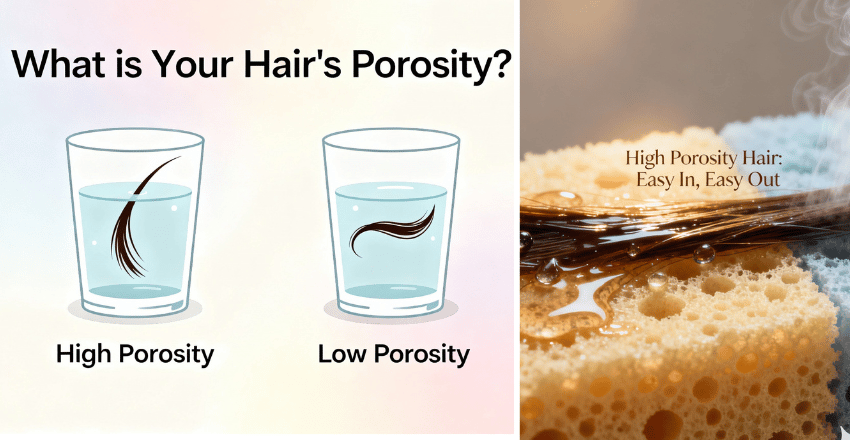
High porosity hair is characterised by an outer layer (cuticle) that is open or damaged, which creates “pores” or gaps where moisture can rush in but then escape equally quickly.
Here are some definitions pulled from trusted sources:
- According to Living Proof: “The wider the gap between your cuticles, the greater the possibility of that same moisture getting out.”
- From L’Oréal Paris: “Hair porosity refers to your hair’s ability to absorb and retain moisture. If your shingles are lifted or ‘open,’ water can get through, which means your hair is probably highly porous.”
Why high Porosity matters?
If your hair has high porosity, you might find that:
- Moisture and products sink in quickly, but the hair dries out fast.
- Your hair may look dry, feel rough, or be prone to frizz and tangling.
- It may be more vulnerable to breakage, damage, and split ends because the protective cuticle layer isn’t intact.
So in short: high porosity means your hair is absorbing but not retaining moisture effectively — so the usual routine may not be enough or may even be counterproductive.
How to recognise if your hair is High Porosity?
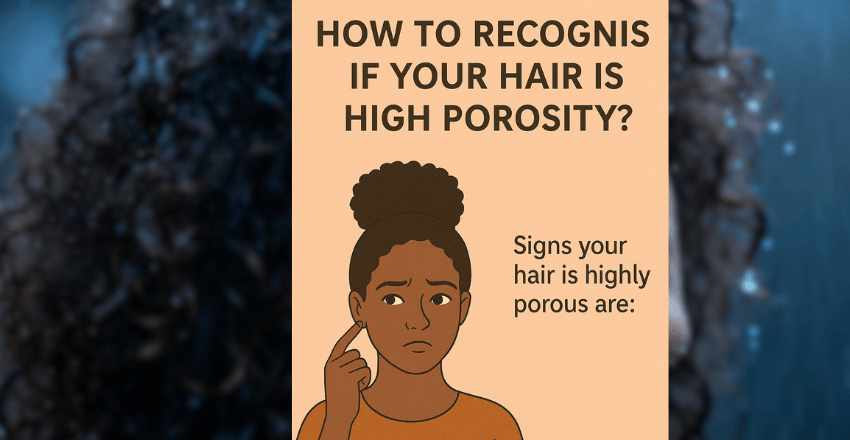
Here are some common signs of high porosity hair:
- Your hair absorbs water/product quickly when applied.
- Your hair feels dry, even though you’ve used products and added moisture.
- Your hair tends to frizz, tangle, or break easily.
- It seems to air-dry very quickly (because moisture is entering and then leaving).
- The hair may appear dull or lack shine (because cuticles aren’t lying flat to reflect light).
Simple at-home tests
There are several simple tests you can try at home to check your hair’s porosity — though they aren’t perfect, they can still offer helpful insight.
- One option is the float test, where you place a clean, dry strand of hair in a glass of room-temperature water; if it sinks quickly, it may indicate high porosity.
- Another method is the spray test: lightly mist a dry section of your hair with water—if it absorbs immediately, your hair is likely highly porous. In contrast, water that sits on the surface suggests low porosity.
- You can also try the feel test by running your fingers from root to tip along a single strand; if it feels bumpy or rough instead of smooth, the raised cuticles may signal high porosity. If you notice several of these signs, you may be dealing with high-porosity hair. However, keep in mind that porosity is just one part of your overall hair profile, and factors like texture, density, and curl pattern also play an essential role.
What causes High Porosity Hair?
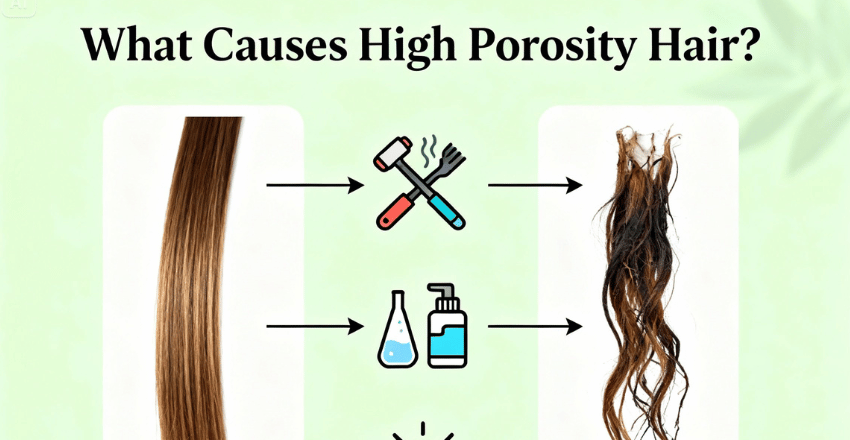
High porosity hair can result from genetics, damage, or a combination. Understanding the cause helps you prevent further damage and treat your hair better.
1. Genetic or natural high porosity
Some people are naturally born with hair that has more open cuticles (for instance, many curly or highly textured hair types). This is not a “fault” or “flaw,” it’s just how the hair was structured.
2. Damage-induced porosity
Many lifestyle and styling factors can lift or damage the hair cuticle, increasing porosity:
- Chemical treatments: Bleaching, dyeing, relaxing, or permanent straightening require opening the cuticle, which can leave it permanently more porous.
- Excessive heat styling: Using high-heat tools (straighteners, curling wands, blow-dryers) without protection can lift or crack the cuticle.
- Environmental damage: UV exposure, wind, pollution, and harsh water/chemicals (in pools, etc) can all damage the hair’s outer layer.
- Over-manipulation: Frequent brushing, rough detangling, and tight hairstyles that tug on the strand all contribute to cuticle damage.
3. Irreversible versus manageable
Important point: once the cuticles are permanently damaged (lifted, cracked, missing), you can’t always restore them to a “perfect flat” state, but you can treat them so they become healthier, more manageable, and retain moisture much better.
Pros And Cons
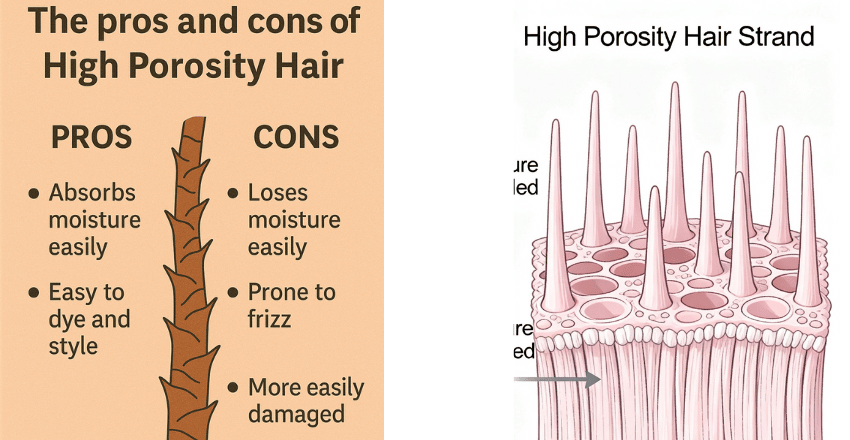
Why is high porosity not totally “bad”?
Believe it or not, high porosity hair does have some advantages:
- Because the cuticles are open, moisture and treatments soak in quickly.
- Styling products (when chosen correctly) can penetrate more quickly, so you may see faster results.
- If you air-dry, your hair may dry faster (less waiting time!).
The challenges you’ll face
On the flip side, high porosity brings its own set of challenges:
- Moisture escapes just as fast as it enters, meaning the hair may still feel dry and brittle.
- Increased risk of breakage, split ends, and damage because the cuticle is compromised.
- Frizz-prone and harder to keep smoothing because cuticles aren’t lying flat.
- You might need to work harder (and smarter) with your hair-care routine; it’s not “set and forget”.
Caring for High Porosity Hair
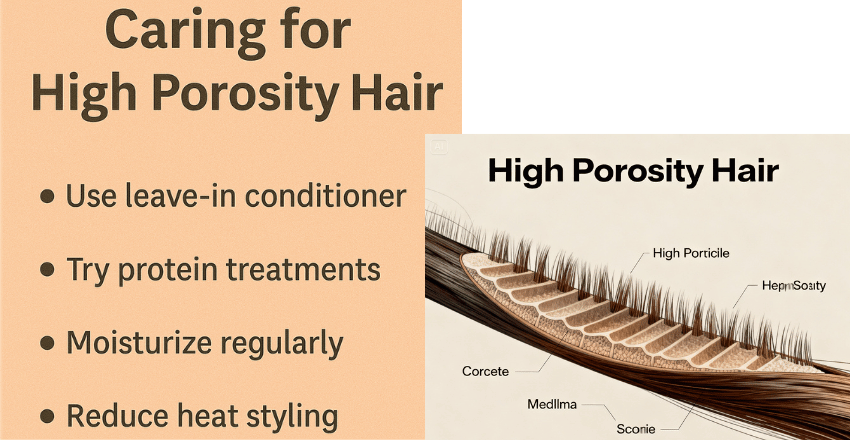
Caring for high porosity requires a specialized approach to moisturization, protection, and styling. Here are some tips to help you manage your hair effectively.
1. Moisturization is Key
High porosity needs moisture to combat dryness. Use the following methods:
- Deep Conditioning: Incorporate deep conditioning treatments at least once a week. Look for products that contain protein to help strengthen your hair.
- Leave-In Conditioners: These provide ongoing moisture and protection throughout the day.
- Hydrating Oils: Oils like argan, coconut, and jojoba can help seal moisture in.
2. Choose the Right Products
Invest in products specifically formulated for high-porosity hair to keep it strong and well-nourished. Start by choosing sulfate-free shampoos, as harsh sulfates can strip away natural oils and worsen dryness.
Incorporating protein treatments into your routine can also help strengthen the hair and fill in gaps in the cuticle caused by damage. Additionally, using moisturizing masks that offer intense hydration will help replenish lost moisture and improve your hair’s softness and elasticity.
3. Limit Heat Styling
Reduce the use of heat-styling tools to prevent further damage and protect your hair’s health. Whenever possible, allow your hair to air-dry, as this significantly reduces heat exposure and helps retain moisture. If you do need to use heat styling tools, always apply a heat protectant beforehand to create a protective barrier that shields your hair from excessive dryness and damage.
4. Regular Trims
Getting regular trims helps eliminate split ends and prevents further damage. Aim for a trim every 6-8 weeks.
5. Moisture layering & sealing (LOC / LCO methods)
Because porosity hair loses moisture quickly, layering products helps lock it in:
- L = Leave-in conditioner or water-based product
- O= Oil (lightweight oils like argan, jojoba, grapeseed)
- C = Cream or butter (heavier sealant)
For instance, after washing and detangling, apply a leave-in, then a light oil, and finish with a cream that seals the cuticle. This “sandwich” approach helps both absorb and retain moisture.
6. Daily/weekly care & protective steps
- Night-time protection: Use a satin or silk pillowcase or wrap your hair to reduce friction and moisture loss.
- Detangle gently: Use a wide-tooth comb or fingers, starting from the ends and working up. High-porosity hair is more fragile.
- Protect from heat: If you use heat styling, always apply a heat protectant and keep temperatures moderate. Excess heat further lifts cuticles.
- Avoid harsh chemicals: If possible, minimise bleaching, relaxing, or frequent colour treatments. These increase porosity and damage.
- Regular trims: End-damage and split ends can travel up the strand; trimming helps maintain healthy length and appearance.
Styling Tips for High Porosity Hair
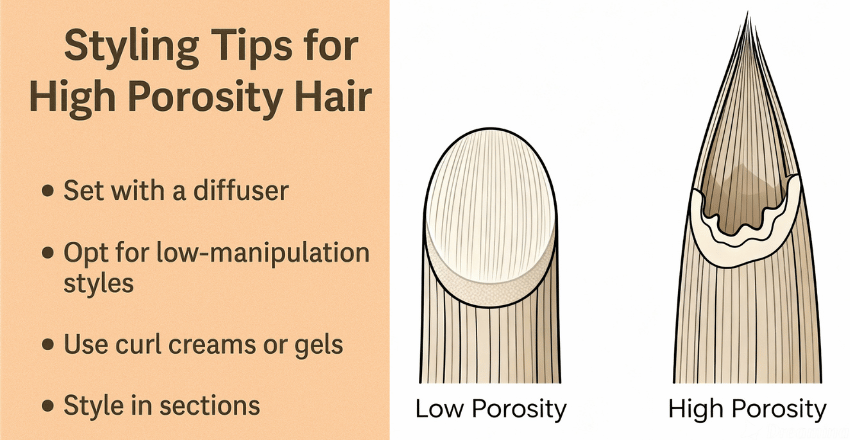
Adapting your styling routine can significantly improve the health and appearance of high porosity hair. Here are some practical tips:
1. Protective Styles
Protective styles can help retain moisture and reduce manipulation:
- Braids, Buns, and Twists: These styles keep hair protected from the elements and reduce breakage.
- Wigs or Weaves: Consider using wigs or weaves to give your natural hair a break.
2. Avoiding Heavy Products
Lighter products often work better for high porosity hair:
- Lightweight Gels and Mousses: Opt for products that won’t weigh hair down.
- Avoid Silicone-Heavy Products: These can lead to buildup and cause more dryness.
3. Use a Silk or Satin Pillowcase
Switching to a silk or satin pillowcase can reduce friction while you sleep, helping to prevent tangling and breakage.
Sample routine for High Porosity Hair
Here’s a practical weekly routine you can adapt:
| Step | What to do |
| Pre-wash detangle | Use a wide-tooth comb + a light pre-shampoo conditioner or oil to reduce tugging. |
| Wash (once or twice a week) | Use a sulphate-free, moisturizing shampoo. Use lukewarm water. |
| Deep condition | After shampoo, apply a deep conditioner with protein + humectants. Leave on 15-30 minutes under cap if possible. |
| Rinse (cooler water) | A final cooler rinse helps flatten the cuticle and lock in moisture. |
| Leave-in & seal | On damp hair: apply leave-in, then oil, then cream (LOC or LCO method). |
| Style & protect | Use a gentle styling method, minimise heat, and use protective styles. At night, sleep on satin/silk. |
| Daily/alternate days | Mist lightly with water + leave-in; seal ends with oil/cream; wear a protective style or a loose ponytail. |
With consistent practice, you’ll likely see improved texture, less breakage, and better manageability within a few weeks to months.
Home Remedies
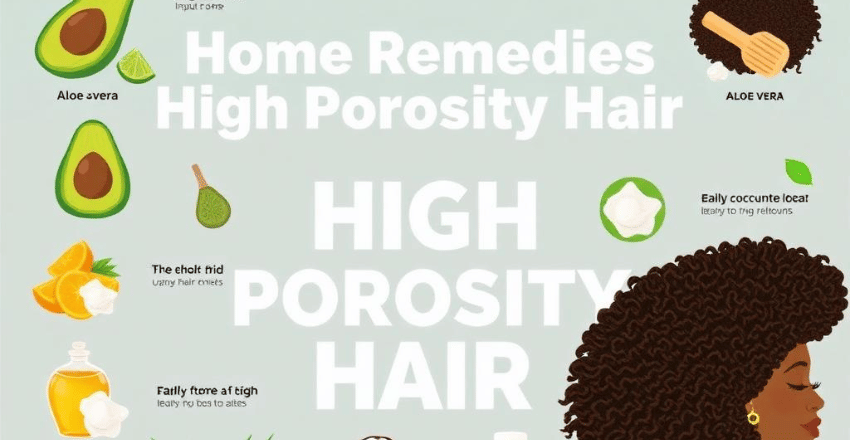
In addition to store-bought products, various home remedies can be beneficial for high porosity hair.
- Aloe Vera: Aloe vera is an excellent natural moisturizer. Apply aloe vera gel to your hair as a mask before shampooing to hydrate and soothe.
- Avocado Mask: Avocado is packed with vitamins and healthy fats. Mash an avocado, mix it with a bit of olive oil, and apply it as a deep conditioning treatment.
- Yogurt and Honey: Mixing yogurt with honey can provide a protein boost and hydration. Apply this mixture to your hair, leave it on for 30 minutes, and rinse.
Mistakes to Avoid
- Using heavy products without sealing: Even a heavy cream won’t work well if the cuticle stays open. Sealing is essential.
- Assuming “more product = better”: Because absorption is fast, you might be tempted to pile on product, but if it’s not sealed, it can escape just as fast.
- Ignoring protein: Many high-porosity hair types need protein to rebuild and strengthen the hair shaft.
- Using high heat or harsh treatments: These continue to damage the cuticle and worsen porosity.
- Not addressing daily habits: Friction, rough towel-drying, tight hairstyles, and exposure to elements can all make porosity worse.
Conclusion
High-porosity hair might require a little more attention and the proper routine, but it’s absolutely manageable and can look healthy, vibrant, and full of life. The secret lies in moisture, sealing, and protection. It’s not about battling your hair; it’s about working with its structure and giving it what it needs.
By recognising your hair’s porosity, being kind to your cuticles, choosing the right products, and protecting your strands, you can turn what might feel like a “problem” into a beautiful, manageable hair type.
Want to know about Ultimate Guide to the Best Hair Growth Product: Natural Remedies, Oils, Serums, and Supplements That Work Check out our Health category.
FAQs
Quick drying, frizz, breakage, and a dry or lifeless look are indicators of high porosity. This type of hair always feels dry because it absorbs moisture and product fast, but it also loses moisture just as quickly. Additionally, it can fade rapidly after coloring and tends to tangle easily.
For very porous hair, deep conditioning treatments are particularly beneficial in providing moisture, nutrition, and softness.
High-priority allows your hair to absorb specific products more rapidly. Those with high porosity hair use lighter conditioners, whereas those with low porosity use heavier ones.
Your hair clings to moisture in the air and frizzes readily because the cuticles of high porosity are exposed to the environment.
